6 guides
Driving & Technique
Setting the rig up correctly is half the job. This is the other half: what changes about driving once a trailer is attached, and what the manufacturers who built your vehicle actually publish about handling it.
Four things change the moment you couple up, and each has a consequence at the wheel. Mass, because you are now accelerating and stopping perhaps twice the weight with the same brakes on the tow vehicle. Length, which changes turns, passing and lane changes. A hinge in the middle, which is what makes reversing counter-intuitive and sway possible at all. And a rear-biased load that lightens the front axle, where your steering lives.
Much of the advice circulating about towing technique is sound but unsourced, and some of it is contradicted by the people who built the vehicle. These guides quote owner's manuals directly and say so when a widely repeated technique turns out not to appear in any of them. General Motors publishes the only following-distance rule we could find from a manufacturer, and it is a multiplier rather than a count of seconds: stay at least twice as far behind as you would without a trailer.
The place this matters most is sway. Three manufacturers — GM, Ford and Jayco — publish nearly the same three-step response: ease off the accelerator gradually, keep steering inputs small, then stop and find the cause. What they disagree about is whether to use the brake controller's manual lever, with a controller maker recommending it for sway and Ford's own manual naming that exact use as misuse. Where manufacturers conflict, these guides show the conflict rather than picking a side quietly.
One theme runs through the whole category and is easy to miss: several driver-assistance features quietly stop covering you when a trailer is attached. Blind-spot detection zones may not extend behind the trailer, rear cross-traffic alert can disable itself entirely, parking aids should be switched off, and the anti-lock system does not control the trailer's brakes at all. Assume the electronics cover the tow vehicle only until you have confirmed otherwise in your own manual.
The sequences here reward learning the order rather than the steps. Hitching, unhitching and parking on a hill all have published orders where the order is the point — chocks take the load before the parking brake is set, chocks go on before anything is disconnected, and the coupler latch opens before the vehicle backs up rather than after.
All driving & technique guides
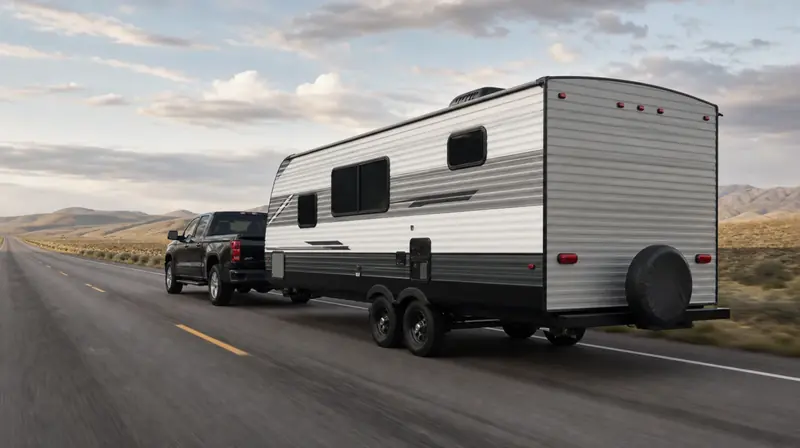
- 20 min readHow to Tow a Trailer: From Hitched to ConfidentSpeed, spacing, corners, hills, sway, reversing and parking — what Ford, GM and Jayco actually publish about driving with a trailer, including what the driver aids do not do.
- 13 min readTow/Haul Mode: What It Does and Whether It Hurts to Leave It OnWhat tow/haul actually changes, in the manufacturers' own words — and the honest answer on leaving it on, including the one condition Ford says never to use it in.
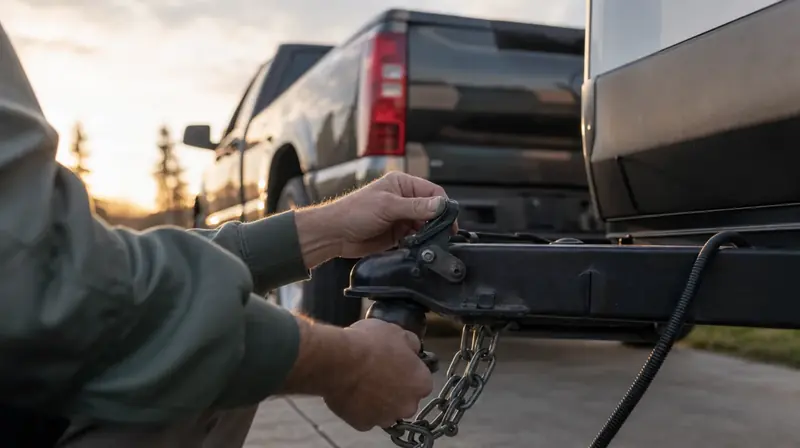
- 17 min readFirst-Time Towing a Travel Trailer: The Complete ChecklistFrom the dealer lot to your first 50 miles, with the break-in rule most first-timers miss and the re-torque schedule trailer makers actually publish. Sourced to OEM manuals.
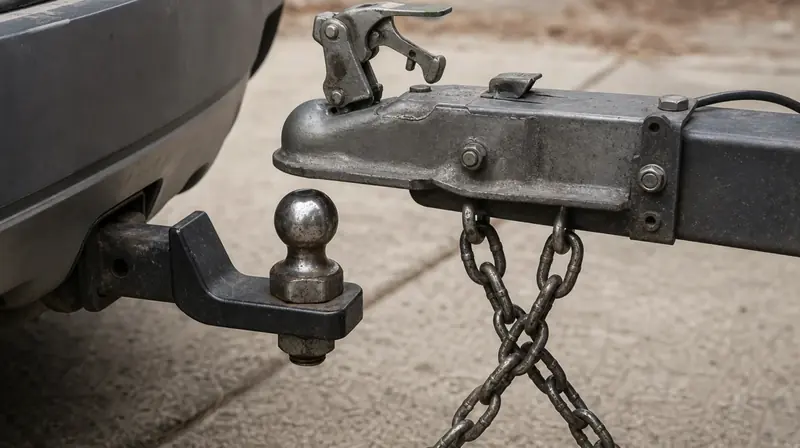
- 12 min readHow to Hitch a Trailer Step by Step: Ball, Chains, Breakaway, Tug TestThe hitching order a trailer maker actually publishes, plus the failure each step prevents: coupler seating, crossed chains, breakaway lanyard, light test, tug test.
- 15 min readWhat Is Trailer Sway? Causes, Recovery and PreventionWhat makes a trailer sway, the recovery steps GM, Ford and Jayco publish, and the loading, tire and hitch checks that prevent it.
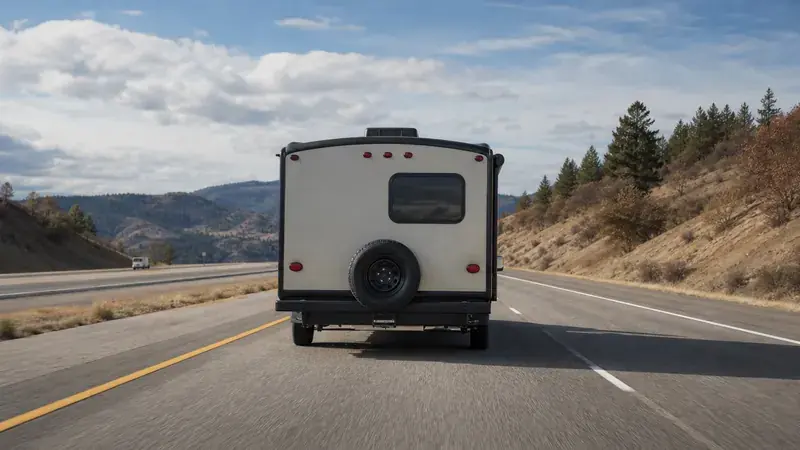
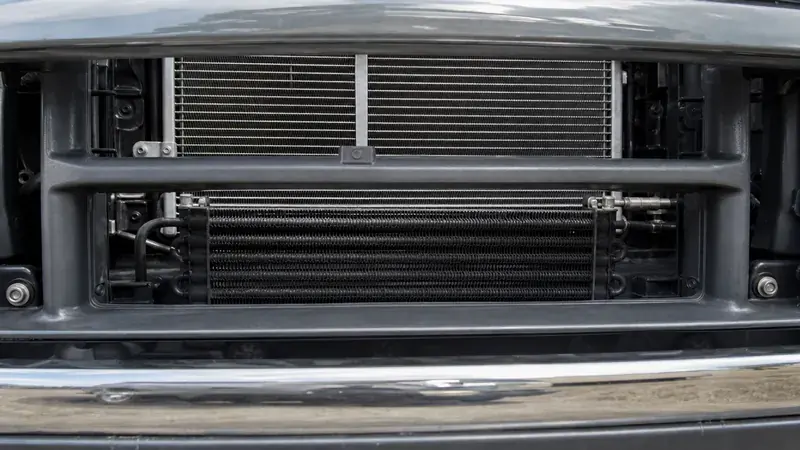
- 15 min readCan Towing Damage Your Transmission? Heat, Tow/Haul Mode and MaintenanceWhy towing heats an automatic transmission, how torque converter lock-up and tow/haul mode help, and the severe-service and temperature checks manufacturers recommend.


Other guide categories
- Ratings & CapacityWhat GVWR, GCWR, GAWR and payload each control, and how to find your real numbers.
- Payload & Tongue WeightThe limit that binds first on most family setups, and how to budget for it.
- Can I Tow It?Worked answers for a specific truck or SUV paired with a specific trailer.
- Charts & ReferenceLookup tables for towing capacity, payload, tongue weight and trailer weights.
- Laws & ComplianceTrailer brake, breakaway and safety-chain rules, sourced to each state's statute.
- Safety & SetupSway, weight distribution, scale weighing and the mechanical side of towing.