18 guides
Can I Tow It?
Sometimes you do not want the method, you want the answer for your vehicle and the trailer in front of you. These guides run the numbers on specific pairings and show the working, so you can see which limit binds and by how much.
Each one follows the same shape: the trailer's loaded weight, the tongue or pin weight it produces, what the vehicle has to carry before the trailer is attached, and what the manufacturer's own figures allow. The verdict is rarely a flat yes or no. More often it is yes with a caveat about how many people can ride along, or no in the configuration most buyers order but yes in a higher-payload one.
Two patterns repeat often enough to be worth stating up front. Full-size pickups usually clear their tow rating long before their payload, so the question is almost always whether the hitch weight plus the family fits. Unibody SUVs tend to lose payload faster than they lose tow rating, so a rating that looks generous on paper can be unusable with a third row occupied.
A third pattern shows up in how these questions are usually asked. People ask whether a vehicle can tow a trailer of a given weight, but the weight they have in mind is almost always the advertised dry, unladen or shipping weight. That figure describes a trailer with no water, no propane, no battery and nothing you own in it. A travel trailer commonly gains well over a thousand pounds between the brochure and the campsite, and the tongue weight rises with it. Every answer here is worked against the trailer's GVWR for that reason.
Marketing language deserves the same scepticism. A trailer described as half-ton towable is making a claim about tow rating, usually anchored to that dry weight, and it says nothing about whether your particular half-ton has the payload to carry its hitch weight with your family aboard. The phrase is not regulated, nothing requires the manufacturer to say which half-ton it has in mind, and the claim is generally true of the trailer while being irrelevant to the decision you are making.
The verdicts also depend on things a spec sheet will not tell you. Wheelbase relative to trailer length affects stability, and a short-wheelbase SUV with a long trailer can be inside every published limit and still handle badly. Frontal area matters on a tall boxy trailer in a crosswind. Grade and altitude reduce what a vehicle can do — one manufacturer asks owners to derate combined weight by two percent for every thousand feet of elevation, which is a fourteen percent reduction on a seven-thousand-foot pass.
Two more things reliably change the answer and are easy to overlook. Passenger count is the first: an answer worked for two adults often fails for a family of five, because every additional person is weight competing with the tongue for the same allowance, and children in the third row of an SUV sit behind the rear axle where they affect balance as well as total. The second is what is already in the vehicle before the trip — roof boxes, recovery gear, tools, a full tank of fuel, and on a pickup whatever lives permanently in the bed.
It is also worth being clear about what a yes means. Clearing the arithmetic means the setup is legal and within the manufacturer's limits. It does not promise the combination will feel composed in a crosswind, stop comfortably on a long descent, or climb a mountain pass at traffic speed. Those depend on wheelbase, frontal area, brake capacity and gearing, and a rig that is technically inside every limit can still be unpleasant or unsafe to drive if it is at the edge of all of them at once.
If your exact pairing is not here, the method transfers cleanly. Take the trailer's GVWR rather than its dry weight, multiply by roughly 13 percent for a conventional coupling or 20 percent for a fifth wheel, add everyone riding along, add what is in the cab and bed, add the hitch hardware, and compare the total against the placard on that specific vehicle. If it fits with a few hundred pounds spare, the answer is yes.
All can i tow it? guides
- What Size Truck Do I Need to Tow a Camper?Match camper weight to truck class using payload, not tow rating. Midsize, half-ton, three-quarter-ton and one-ton limits, with a worked example.
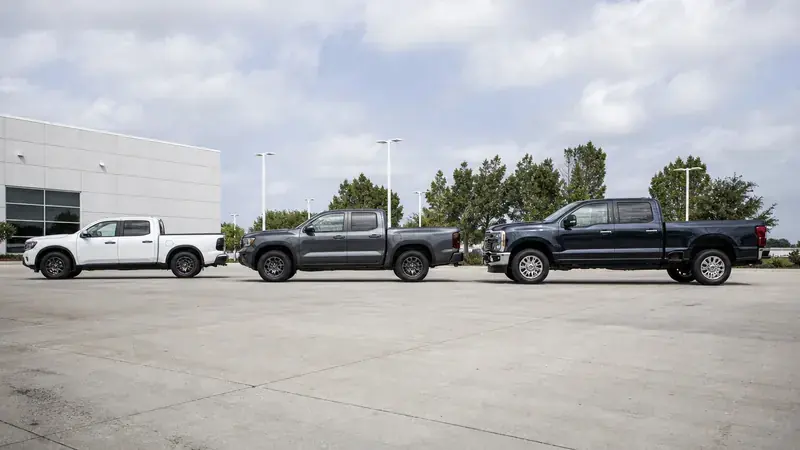
- Can a Ford F-150 Tow a 7,000 lb Travel Trailer?Yes on tow rating for 2025 F-150s, maybe on payload. Ford's ratings by engine and cab, the 2.7L EcoBoost case, GCWR, and the frontal-area cap.
- Can a Ram 1500 Tow an 8,000 lb Camper?A 2024 Ram 1500 HEMI is rated 8,060-12,750 lb by axle and cab, with 1,740-1,860 lb of payload. Why an 8,000 lb camper is a payload and axle question.
- Can a Chevy Silverado 1500 Tow a 9,000 lb Trailer?2024 Silverado 1500 crew cab 4x4 ratings run 9,000-13,100 lb. Whether a 9,000 lb trailer fits depends on the GCWR and package, not the engine alone.
- Can a Toyota Tacoma Tow a 5,000 lb Camper?A 2024 Tacoma is rated 3,500-6,500 lb by grade, with a 640-650 lb tongue limit. Why a 5,000 lb camper fits only with the right grade and a lighter tongue.
- Can a Toyota Tundra Tow a Fifth Wheel?Toyota rates the 2024 Tundra at up to 12,000 lb but lists 1,485-1,940 lb of payload. See which fifth wheels its payload can carry, with worked numbers.
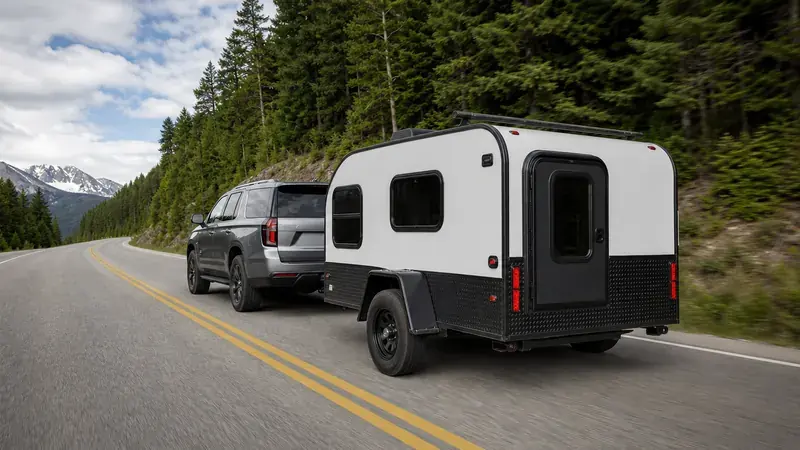
- 16 min readCan My SUV Tow a Camper? Payload, Length and Manual LimitsCheck whether your SUV can tow a camper: placard payload with the family aboard, hitch and frontal-area limits, the wheelbase rule of thumb, and a worked example.
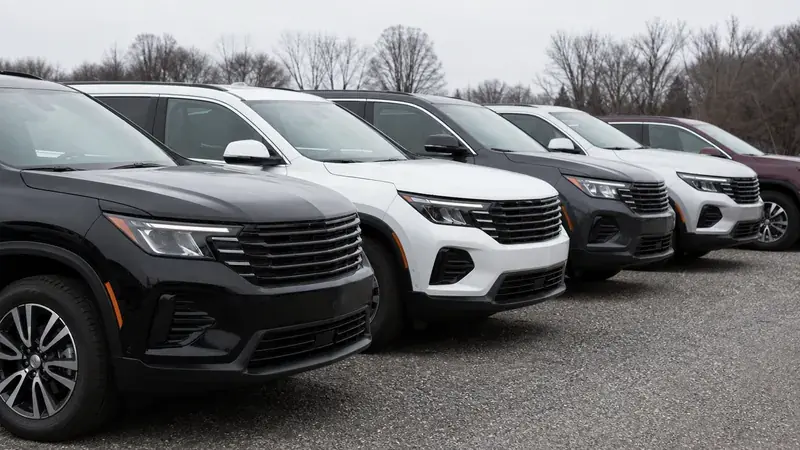
- 16 min readBest SUVs for Towing in 2026: Ranked by Real-World CapabilityManufacturer-verified tow ratings and wheelbases for the SUVs people actually shop, the figures widely published wrong, and why payload, not tow rating, decides it.
- 10 min readCan a Toyota RAV4 Tow a Teardrop Camper? The Complete Weight & Safety GuideYes. A 2026 RAV4 is rated 1,750 lb (FWD and LE AWD) or 3,500 lb (most AWD grades). Which teardrops fit each, using loaded weight, not dry weight.
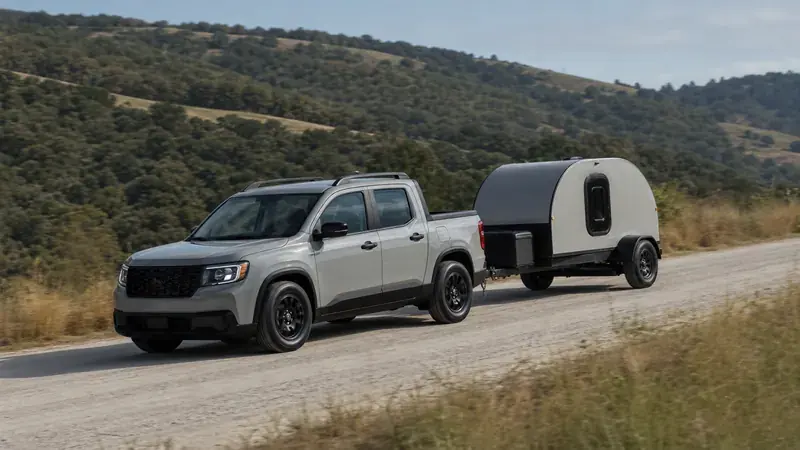
- 11 min readCan the Ford Maverick Tow a Travel Trailer? Real Payload Math & Trailer GuideOnly a small one, and only with the 4K Tow Package: 4,000 lb, a 400-lb tongue limit and a 40 sq ft frontal-area cap that most travel trailers exceed.
- 9 min readCan a Subaru Outback Tow an Airstream? The Complete Compatibility AnalysisNot comfortably. Only the turbo Outback reaches 3,500 lb, and even the smallest Airstreams' hitch weight tops its 350-lb tongue limit before you pack.
- 10 min readCan a Honda Pilot Tow a Horse Trailer? The Complete Safety & Weight AnalysisOne horse in a light trailer, possibly; two horses, no. Honda's own table cuts the AWD Pilot's 5,000-lb limit as passengers are added. The math.
- 10 min readCan a Tesla Model Y Tow a Caravan? EV Towing Physics, Range Loss & Complete GuideYes: 3,500 lb in the US, 1,600 kg in Europe, but the EU 100-kg nose limit binds first and Tesla warns range drops significantly. What fits.
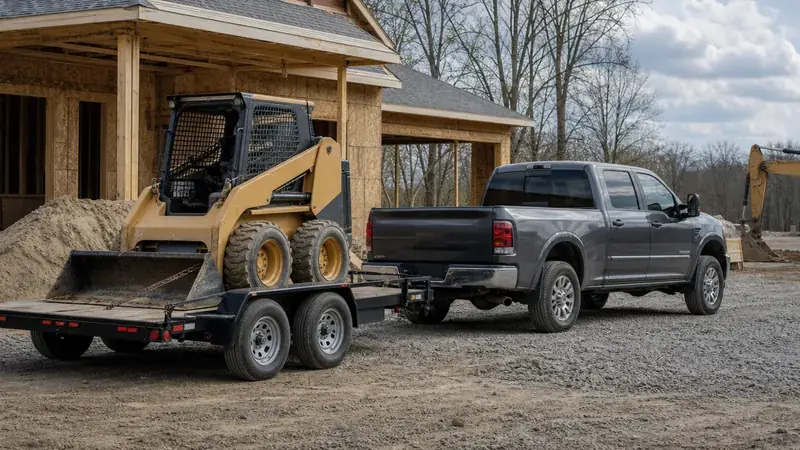
- 10 min readCan a Toyota Tacoma Tow a Skid Steer? The Complete Equipment Hauling GuideOnly the smallest. A 2024+ Tacoma tows up to 6,500 lb; a Bobcat S70 on a light trailer fits, a mid-size S450 plus trailer does not. The math.
- 10 min readCan a Jeep Wrangler Tow a Boat? Complete Weight, Stability & Ramp GuideYes, a small-to-mid boat. Jeep quotes up to 5,000 lb for a properly equipped Wrangler, but many are rated lower. How to weigh the boat, motor and trailer.
- 9 min readCan a Hyundai Tucson Tow a Pop-Up Camper? Complete Capability & Safety GuideYes, a light one. Every 2025 Tucson is rated 2,000 lb with trailer brakes but 1,650 lb without, and many small pop-ups have no brakes. What fits each.
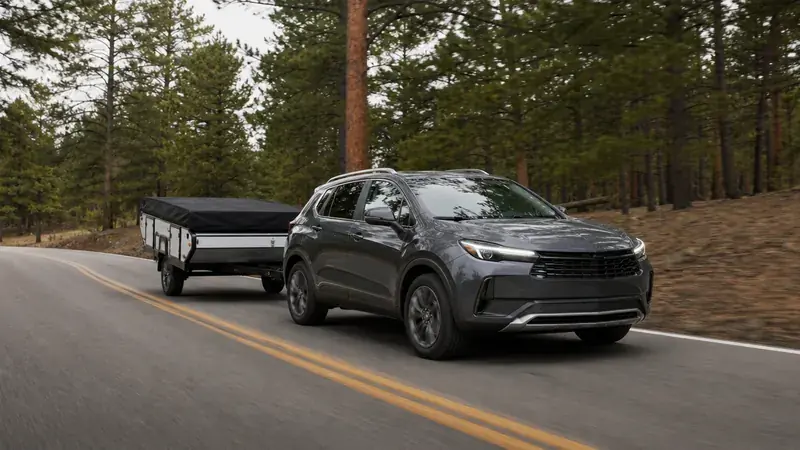
- 9 min readCan a Kia Sportage Tow a Small RV? The Complete Weight & Physics AnalysisOnly a light one. The gas Sportage is rated 2,500 lb braked, but its 220-lb tongue limit caps a normally loaded trailer near 2,200 lb. The math.
- 9 min readCan a Nissan Rogue Tow a Jet Ski? Complete CVT & Marine Towing AnalysisYes for one personal watercraft, no for two. The 2025 Rogue is rated 1,500 lb with a 150-lb tongue limit. How to total the PWC, fuel and trailer.


Other guide categories
- Ratings & CapacityWhat GVWR, GCWR, GAWR and payload each control, and how to find your real numbers.
- Payload & Tongue WeightThe limit that binds first on most family setups, and how to budget for it.
- Charts & ReferenceLookup tables for towing capacity, payload, tongue weight and trailer weights.
- Laws & ComplianceTrailer brake, breakaway and safety-chain rules, sourced to each state's statute.
- Safety & SetupSway, weight distribution, scale weighing and the mechanical side of towing.
- Driving & TechniqueHitching, speed and spacing, corners, hills, sway, reversing and parking.