Towing Basics
What Can I Tow With My Towing Capacity? The 3,500 to 15,000 lb Ladder


On this page12 sections
How to Use This Page
Find your tow rating, drop to that rung of the ladder, and read across. Each tier gives you the trailer weight to shop for, the tongue weight it implies, and the payload your truck needs to carry that tongue with a family aboard.
Two rules do the work, and both cost you weight before you start:
- Shop on the trailer's GVWR, not its dry weight. The brochure figure is the trailer empty, and you will never tow it empty. This is covered in full in dry weight vs GVWR.
- Plan to about 80% of your rating. The 80/20 rule is a planning convention rather than a law, and it leaves margin for grades, wind and the day you load heavier than usual.
Apply both and a 7,500 lb rating is really a shopping budget of about 6,000 lb of trailer GVWR. That is the number this page uses.
Throughout, tongue weight is figured at 13% of loaded trailer weight and the family load at 600 lb — the same planning figures the site's own calculators use, stated here so you can adjust them to your own crew.
The Ladder
| Your tow rating | Plan to 80% | Shop for trailer GVWR up to | Tongue at 13% | Payload your truck needs |
|---|---|---|---|---|
| 3,500 lb | 2,800 lb | 2,800 lb | 364 lb | about 994 lb |
| 5,000 lb | 4,000 lb | 4,000 lb | 520 lb | about 1,150 lb |
| 7,500 lb | 6,000 lb | 6,000 lb | 780 lb | about 1,470 lb |
| 10,000 lb | 8,000 lb | 8,000 lb | 1,040 lb | about 1,730 lb |
| 13,000–15,000 lb | 10,400–12,000 lb | 12,000 lb | 1,560 lb | about 2,250 lb |
How the payload column is built. Tongue weight, plus 600 lb of people and gear, plus an assumed weight for the hitch hardware: 30 lb for a plain ball mount on the two light tiers, and 90 lb for a weight distribution hitch from 7,500 lb up. Those hitch figures are placeholders; use the weight on your own hitch's product listing.
That last column is the one that surprises people. A 10,000 lb tow rating asks for roughly 1,730 lb of payload once a family is aboard, and 12 of the 47 half-ton configurations in our database publish less than that even at their maximum. Check yours against the payload capacity chart, then run the real numbers through Can I Tow This?
Fifth wheels are the exception to the tongue column. A commonly used guideline puts their pin weight at 15–25% of loaded weight on the truck instead of 13%, and it lands in the bed rather than behind the axle — see the 13,000–15,000 lb tier below.
Why "It Fits the Rating" Is Not the Whole Answer
A trailer that sits under your tow rating can still be the wrong trailer, for three separate reasons.
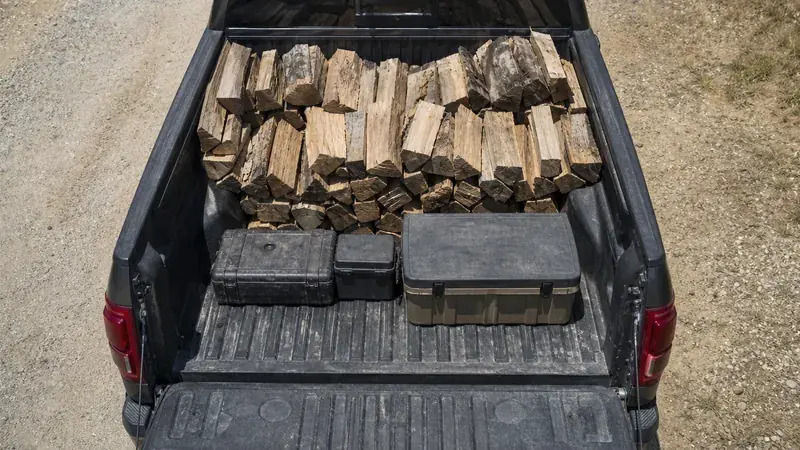
Payload usually runs out first. Tongue weight is not carried by the tow rating; it is carried by the truck, and it comes out of the same payload allowance as your passengers and your gear. This is the single most common way a legal-on-paper setup turns out to be overloaded — the mechanics are in payload vs towing capacity.
GCWR caps the pair. Your truck has a combined rating covering truck and trailer together. Load the truck heavily and the trailer weight it can legally pull drops, even though the tow rating on the brochure never changes. See GVWR vs GCWR.
The hitch has its own rating. The receiver carries two figures — a weight-carrying rating and a higher weight-distributing one — and either can be lower than the truck's tow rating. On many half-tons the receiver is the binding limit until a weight distribution hitch is fitted.
There is also a rating a trailer spec sheet may not give you at all. Some manufacturers publish GAWR, the per-axle rating, instead of a GVWR — nuCamp's teardrop pages are an example. Those are different quantities and do not substitute for one another, which is covered in GAWR vs GVWR.
3,500 lb Rating: Teardrops, A-Frames and Small Fiberglass
Budget: 2,800 lb of trailer GVWR. This is crossover and small-SUV territory, and it is a genuinely useful tier — a lot of well-built campers live here.
| Trailer | Dry weight | GVWR | Tongue / hitch (dry) | Length |
|---|---|---|---|---|
| SylvanSport GO | 840 lb | 1,650 lb | 85 lb | 11' 8" |
| Scamp 13' LITE | 1,250 lb | 2,200 lb | 150 lb | 13' |
| Scamp 13' Standard | 1,600 lb | 2,200 lb | 180 lb | 13' |
| Aliner Scout | 1,405 lb | 3,000 lb | 130 lb | 15' |
| Aliner Ranger 12 | 1,510 lb | 3,000 lb | 150 lb | 15' |
| Aliner Classic Twin Bed | 1,810 lb | 3,000 lb | 160 lb | 15' |
Comfortably inside budget: the SylvanSport GO and both 13' Scamps — though note Scamp publishes starting dry and hitch weights, so a specific build will weigh more than the table shows. The Aliners at a 3,000 lb GVWR are slightly over a strict 2,800 lb planning figure but well under the 3,500 lb rating itself, which is a reasonable place to exercise judgement.
Just above the line. The Aliner Expedition and Evolution 15, the Casita 17' Spirit and Liberty, and the Happier Camper HC1 all carry a 3,500 lb GVWR — equal to the whole rating, with no 20% margin left. These work on a 3,500 lb rating only if you accept planning to 100%.
Teardrops are a special case. nuCamp publishes a dry weight, a dry tongue weight and a GAWR, but no GVWR. The TAB 320 Classic is 2,047 lb dry with a 3,000 lb GAWR; the TAB 400 Classic is 2,915 lb dry against a 3,900 lb GAWR. Because a GAWR is not a GVWR, you cannot compute a cargo capacity from those pages — nuCamp's own note says the figures exclude "propane, tank fluids, cargo, and optional equipment" and are approximate.
5,000 lb Rating: Small Travel Trailers You Can Live In
Budget: 4,000 lb of trailer GVWR. The first tier where a conventional travel trailer with a wet bath, a real bed and a kitchen becomes realistic.
| Trailer | UVW | GVWR | Dry hitch | CCC | Length |
|---|---|---|---|---|---|
| Jayco Jay Feather Air SL 17BHSL | 2,880 lb | 3,750 lb | 290 lb | 870 lb | 21' 3" |
| Jayco Jay Feather Air SL 17RBSL | 2,920 lb | 3,750 lb | 310 lb | 830 lb | 21' 7" |
| Jayco Jay Flight 170BH | 3,000 lb | 3,750 lb | 325 lb | 750 lb | 21' 3" |
| Scamp 19' (fifth wheel) | 3,100 lb | 4,000 lb | 500 lb | — | 19' |
| Jayco Jay Flight 175BH | 3,285 lb | 4,600 lb | 340 lb | 1,315 lb | 22' 3" |
| Jayco Jay Flight 197MB | 3,965 lb | 4,995 lb | 610 lb | 1,030 lb | 23' 7" |
The first four fit a 4,000 lb budget. The 175BH and 197MB do not — they sit at 4,600 lb and 4,995 lb GVWR, which is at or above the full 5,000 lb rating before any margin.
Watch the cargo capacity in this tier: 750 to 870 lb on the lightest floorplans. Water counts against it at 8.3 lb per gallon, the figure federal labelling rules use for RV water capacity (FMVSS 110), so multiply the fresh tank's capacity from the spec sheet by 8.3 before you decide whether to travel with it full.
Note the Scamp 19' is a fifth wheel, so its 500 lb hitch figure is pin weight landing in a truck bed, not tongue weight behind the bumper.
7,500 lb Rating: Where Midsize Trucks Land
Budget: 6,000 lb of trailer GVWR. This is around the top rating of the Ranger and several other midsize pickups (6 of the 17 midsize and compact configurations in our database are rated 7,500 lb or more), and it is where the gap between the headline number and the real shopping budget starts to bite.
| Trailer | UVW | GVWR | Dry hitch | Length |
|---|---|---|---|---|
| Jayco Jay Flight 210QB | 4,275 lb | 6,000 lb | 450 lb | 25' 8" |
| Jayco Jay Feather 18RBF | 4,655 lb | 6,200 lb | 490 lb | 23' 1" |
| Grand Design Imagine XLS 17MKE | 4,945 lb | 6,395 lb | 525 lb | 21' 11" |
| Jayco Jay Feather 21MML | 5,095 lb | 6,500 lb | 580 lb | 25' 5" |
| Big Tex 60EC-16 car hauler | 1,710 lb empty | 6,000 lb | — | 16' deck |
Only the Jay Flight 210QB lands on a 6,000 lb budget, and it lands exactly on it. The others are 200 to 500 lb over it — usable on a 7,500 lb rating if you are honest about running closer to the limit, and comfortable on a 10,000 lb rating.
This tier makes the article's point better than any other. A 7,500 lb rating sounds like it covers a "6,500 lb trailer" easily. Once you shop on GVWR and keep 20% in hand, a 25-foot bunkhouse at a 6,500 lb GVWR is already at the edge.
The Big Tex 60EC-16 is here as a reminder that the ladder is not only about campers: an empty 1,710 lb car hauler leaves roughly 4,290 lb for the vehicle you put on it.
10,000 lb Rating: Full-Size Half-Ton Territory
Budget: 8,000 lb of trailer GVWR. 32 of the 47 half-ton configurations in our database are rated to tow 10,000 lb or more, and many family-sized travel trailers sit in this range.
| Trailer | UVW | GVWR | Hitch / pin | Length |
|---|---|---|---|---|
| Jayco Jay Feather 21MBH | 5,510 lb | 6,995 lb | 625 lb | 26' 8" |
| Grand Design Imagine XLS 22MLE | 5,358 lb | 6,995 lb | 664 lb | 26' 1" |
| Jayco Jay Feather 23RK | 5,765 lb | 7,400 lb | 665 lb | 28' 7" |
| Jayco Jay Feather 24FK | 5,830 lb | 7,500 lb | 830 lb | 27' 0" |
| Grand Design Imagine XLS 25DBE | 6,313 lb | 7,995 lb | 656 lb | 29' 9" |
| Jayco Jay Feather 27BH | 6,725 lb | 8,200 lb | 860 lb | 32' 3" |
| Grand Design Momentum MAV 22MAV toy hauler | 5,900 lb | 9,950 lb | 943 lb | 26' 6" |
| Jayco Eagle SLE 24MLE fifth wheel | 7,915 lb | 9,500 lb | 1,480 lb pin | 29' 3" |
| Big Tex 90SR-12 dump trailer | 2,930 lb empty | 9,990 lb | — | 12' bed |
Everything down to the 25DBE fits an 8,000 lb budget. The 27BH at 8,200 lb is marginally over.
Payload is the real gate at this tier, not the tow rating. A 7,995 lb trailer at 13% is about 1,040 lb of tongue weight; add 600 lb of family and an assumed 90 lb of hitch and you need roughly 1,730 lb of payload. That is more than 12 of the 47 half-ton configurations in our database publish even at their maximum, and an optioned truck's door label can be lower still.
Two entries change the arithmetic entirely. The Momentum 22MAV has a 9,950 lb GVWR with a 943 lb hitch weight — and the 4,050 lb gap between its UVW and GVWR is the point of a toy hauler. Loading toward that gap changes the tongue weight substantially. The Eagle SLE 24MLE is a fifth wheel: its 1,480 lb pin weight is a dry figure that rises as the trailer is loaded, lands in the bed and is pure payload. At 20% of its 9,500 lb GVWR the loaded pin would be about 1,900 lb, and with 600 lb aboard only 2 of the 47 half-ton configurations in our database publish the 2,500 lb that needs, which is why fifth wheels in this weight class generally point to a three-quarter-ton truck. See half-ton fifth-wheel towing.
13,000 to 15,000 lb: Fifth Wheels and Heavy Equipment
Budget: 10,400 to 12,000 lb of trailer GVWR. This is heavy-duty truck territory, and the limiting number stops being tow rating and becomes pin weight.
| Trailer | UVW | GVWR | Pin / hitch | Length |
|---|---|---|---|---|
| Grand Design Reflection 303RLS | 10,325 lb | 11,995 lb | 1,985 lb pin | 32' 10" |
| Grand Design Momentum G-Class 25G | 8,600 lb | 13,000 lb | 1,400 lb hitch | 30' 11" |
| Grand Design Reflection 324MBS | 11,280 lb | 13,995 lb | 2,000 lb pin | 37' 0" |
| Grand Design Reflection 311BHS | 11,700 lb | 13,995 lb | 2,450 lb pin | 36' 11" |
| Grand Design Reflection 337RLS | 11,475 lb | 13,995 lb | 2,475 lb pin | 35' 7" |
| Grand Design Reflection 350RDS | 12,250 lb | 14,995 lb | 2,700 lb pin | 39' 3" |
| Grand Design Reflection 367BHS | 13,275 lb | 14,995 lb | 2,770 lb pin | 41' 1" |
| Big Tex 14PI-20 equipment trailer | 3,040 lb empty | 14,000 lb | — | 20' deck |
Read the pin column, not the GVWR column. A Reflection 337RLS asks 2,475 lb of the truck before a single person gets in, and the 367BHS asks 2,770 lb. Those figures are dry, and pin weight rises as the trailer is loaded.
Compare that against the best payload figures in the site's own truck database: a well-specified F-150 tops out near 3,315 lb, a Silverado 2500HD near 3,530 lb, an F-250 near 4,050 lb. A 2,770 lb dry pin does not leave a half-ton anything to work with — this tier is a three-quarter-ton or one-ton conversation, and the fifth-wheel payload guide works the numbers.
The Momentum 25G is the outlier: a 13,000 lb GVWR toy hauler that tows conventionally, so its 1,400 lb hitch weight sits behind the bumper rather than over the axle.
Boats: Read What the Weight Actually Includes
Boat specifications are the least standardised numbers in this guide. Some makers publish a bare hull weight, some include the engine, some publish a "package" figure and never say what is in it. Two boats with the same listed weight can differ by hundreds of pounds on the road, depending on what each figure leaves out.
| Boat | Published weight | What that figure includes | Fuel | Length |
|---|---|---|---|---|
| Ranger RT178 | 1,210 lb | "Approximate Boat Weight" — engine not stated | 22 gal | 17' 10" |
| Ranger Z185 | 1,575 lb | "Approximate Boat Weight" — engine not stated | 33 gal | 18' 8" |
| Chaparral 19 SSi OB | 2,600 lb | "Dry Weight w/ Engines" | 30 gal | 20' 1" |
| Chaparral 21 SSi | 3,300 lb | "Dry Weight w/ Engines" | 40 gal | 21' |
| Sea Ray SPX 190 | 3,527 lb | bare "Dry Weight" — engine not stated | 29 gal | 19' 7" |
| Bayliner VR6 Bowrider | 3,797 lb | "Approx. Weight (with standard engine)" | 33 gal | 22' 7" |
| Bayliner VR6 Bowrider | 4,739 lb | "Approx. Weight (with trailer)" | — | — |
Bayliner is the useful one, because it publishes both figures on the same page. The difference between them is 942 lb — that is the trailer, and it is not a rounding error. Any boat weight that does not mention a trailer is missing the trailer; get its weight from the trailer's own label or manufacturer, or weigh the rig.
Then add fuel. Gasoline weighs roughly 6 lb per US gallon (the exact figure varies with blend and temperature), so the Chaparral 21 SSi's 40-gallon tank adds roughly 240–250 lb when full. Gear, batteries, water in the bilge and a full livewell all come after that.
A caution on "package weight." Tracker, Nitro and Sun Tracker each publish an "Average Package Weight" but none of them defines what it contains. Do not assume it means boat plus motor plus trailer. One of those pages contradicts itself outright — a package weight sits alongside structured data marking the trailer as not included. Where a manufacturer will not say what a number covers, weigh the rig instead: the CAT Scale guide settles it in one stop.
Horse Trailers: The Load Is Alive, and It Dominates
Horse trailers invert the usual arithmetic. With a camper, the trailer is most of the weight. With a horse trailer, the animals are.
| Trailer | Empty weight | GVWR | Horses | Hitch | Length |
|---|---|---|---|---|---|
| Exiss Express BP SS (2H) | 2,700 lb | 7,000 lb | 2 | Bumper pull | 11' |
| Exiss 720 BP | 2,900 lb | 7,000 lb | 2 | Bumper pull | 13' |
| Exiss Express BP SS (3H) | 3,200 lb | 7,000 lb | 3 | Bumper pull | 14' 4" |
| Exiss 730 BP | 3,400 lb | 10,400 lb | 3 | Bumper pull | 16' |
| Exiss 7200 GN | 3,900 lb | 10,400 lb | 2 | Gooseneck | 15' 4" |
| Exiss 7300 GN | 4,400 lb | 10,400 lb | 3 | Gooseneck | 18' 8" |
| Exiss 7400 GN | 4,900 lb | 12,000 lb | 4 | Gooseneck | 22' |
| Exiss 7600 GN | 5,800 lb | 15,000 lb | 6 | Gooseneck | 28' |
Light horse breeds — anything 14.2 hands and taller — weigh 900 to 1,500 lb each according to Extension Horses, the land-grant extension collaborative. Draft breeds exceed 2,000 lb.
Now run the 7300 GN. It is 4,400 lb empty against a 10,400 lb GVWR, so 6,000 lb of capacity. Three light horses at 900 to 1,500 lb each is 2,700 to 4,500 lb — before tack, feed, water or a dressing room. The horses are the majority of the payload, and unlike cargo they move.
Two things follow. First, a horse trailer's loaded weight varies enormously with what is standing in it, so plan on the GVWR rather than any loaded estimate. Second, live load shifts in transit, which is a reason to leave more margin below your ratings than you might for the same weight of camper. Do not plan to reduce tongue weight below the trailer maker's guidance to make the numbers fit; if they do not fit, the answer is a bigger tow vehicle or fewer horses.
A sourcing note worth passing on. Exiss publishes both an empty weight and a GVWR on every model page, and on all eight rows above the GVWR equals the sum of the two axle ratings exactly. Featherlite publishes trailer weights but no GVWR at all — so if you are cross-shopping, you cannot compare the two brands on the same basis without weighing, and you should never borrow a GVWR from one brand to pair with another's weight.
Which Trucks Carry Which Rating
These are the best tow ratings and payload figures in each model family from the site's truck database. Your specific truck may well be below the family maximum, because those figures belong to one particular configuration and equipment package, so check them against the door label and your model year's towing guide.
| Model family | Best tow rating | Best payload |
|---|---|---|
| Ford Maverick | 4,000 lb | 1,500 lb |
| Nissan Frontier | 6,640 lb | 1,430 lb |
| Toyota Tacoma | 6,800 lb | 1,710 lb |
| Ford Ranger | 7,500 lb | 1,430 lb |
| Chevrolet Colorado / GMC Canyon | 7,700 lb | 1,684 lb |
| Jeep Gladiator | 7,700 lb | 1,710 lb |
| Toyota Tundra | 12,000 lb | 1,940 lb |
| Ram 1500 | 12,750 lb | 1,880 lb |
| Chevrolet Silverado 1500 / GMC Sierra 1500 | 13,300 lb | 2,060 lb |
| Ford F-150 | 14,000 lb | 3,315 lb |
| Chevrolet Silverado 2500HD / GMC Sierra 2500HD | 18,500 lb | 3,530 lb |
| Ram 2500 | 19,990 lb | 4,010 lb |
| Ford F-250 | 22,000 lb | 4,050 lb |
Notice how little the payload column tracks the tow rating. The Ranger and the Frontier carry the same 1,430 lb of payload despite an 860 lb difference in tow rating, and the Tacoma out-carries both while towing less than the Ranger.
That is the whole argument for reading the ladder from the payload column rather than the rating. Browse the full per-configuration data in the truck database, and find your own truck's real figure on its door sticker using how to read a towing sticker.
Frequently asked questions
What can I tow with 5,000 lb of towing capacity?
Plan on about 4,000 lb of trailer GVWR after the 80% margin. That covers small travel trailers such as the Jayco Jay Feather Air SL 17BHSL (3,750 lb GVWR) or Jay Flight 170BH (3,750 lb), A-frame campers, and most single-axle utility trailers. It does not comfortably cover a trailer with a 4,600 lb or 4,995 lb GVWR, which sits at or above the full rating before any margin. Expect roughly 520 lb of tongue weight and a payload requirement near 1,150 lb.
What size camper can I tow with a 7,500 lb rating?
Shop for a trailer GVWR up to about 6,000 lb, which in practice means a camper of roughly 21 to 26 feet. A Jayco Jay Flight 210QB at a 6,000 lb GVWR fits; a 26-foot bunkhouse at 6,500 lb GVWR is already at the edge once you plan to 80% and use GVWR rather than dry weight. Expect about 780 lb of tongue weight, which needs roughly 1,470 lb of payload with a family aboard.
Can I tow a 6,000 lb trailer with a 6,500 lb tow rating?
It is inside the rating, but it leaves no planning margin, and the tow rating is rarely the limit that matters. Check the tongue weight instead: 6,000 lb at 13% is 780 lb, and once you add passengers, gear and hitch hardware the truck needs roughly 1,470 lb of payload. If the door sticker says less than that, the setup is over its payload limit even though the trailer is under the tow rating.
What trucks tow 15,000 lb?
In the site's truck database, no half-ton family reaches 15,000 lb — the highest is the Ford F-150 at 14,000 lb in one specific configuration. Ratings of 15,000 lb and above belong to three-quarter-ton and one-ton trucks: the Silverado and Sierra 2500HD at 18,500 lb, the Ram 2500 at 19,990 lb and the F-250 at 22,000 lb. At that weight the deciding figure is usually pin weight rather than tow rating, since a fifth wheel in the 14,000 lb class can put well over 2,500 lb into the bed.
Does towing capacity include the trailer's cargo?
Yes. Tow rating is a limit on the loaded weight of the trailer, not on its empty weight, which is why you should shop against the trailer's GVWR rather than its dry weight. A trailer with a 5,000 lb dry weight and a 7,000 lb GVWR can legitimately weigh 7,000 lb on the road, and that is the figure your rating has to cover.
Why does the payload column matter more than the tow rating?
Because tongue weight is carried by the truck, not by the tow rating. A conventional trailer puts roughly 13% of its loaded weight on the hitch, and a fifth wheel puts 15-25% into the bed. That load comes out of the same payload allowance as your passengers, gear and hitch hardware. It is common for a truck to have thousands of pounds of tow rating left while its payload is already spent, which is the most frequent way a setup that looks legal turns out to be overloaded.
Continue reading
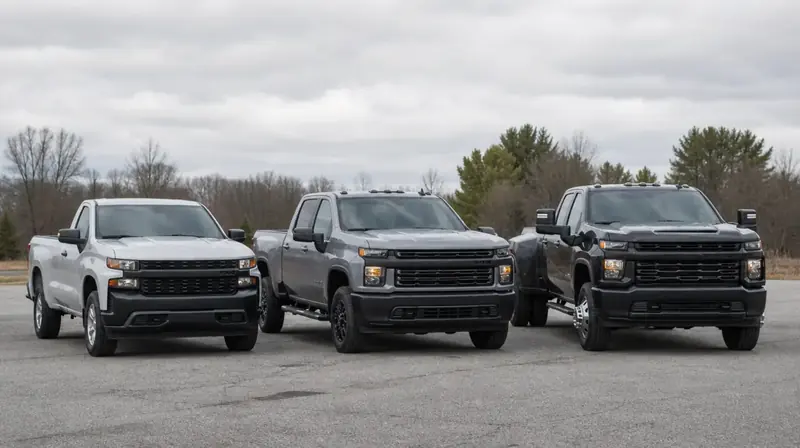
- Buyer's Guide/15 min readHalf-Ton vs 3/4-Ton vs 1-Ton: Which Truck Class Do You Need?
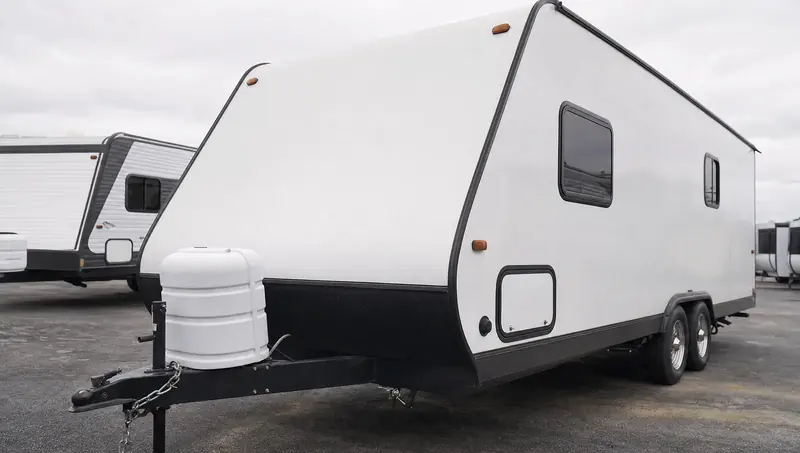
- Towing Basics/14 min readDry Weight vs UVW vs GVWR vs CCC: Which Trailer Number to Use
- Towing Basics/15 min readGAWR vs GVWR: Axle Ratings, Front/Rear, and Why the Sum Is Not the GVWR
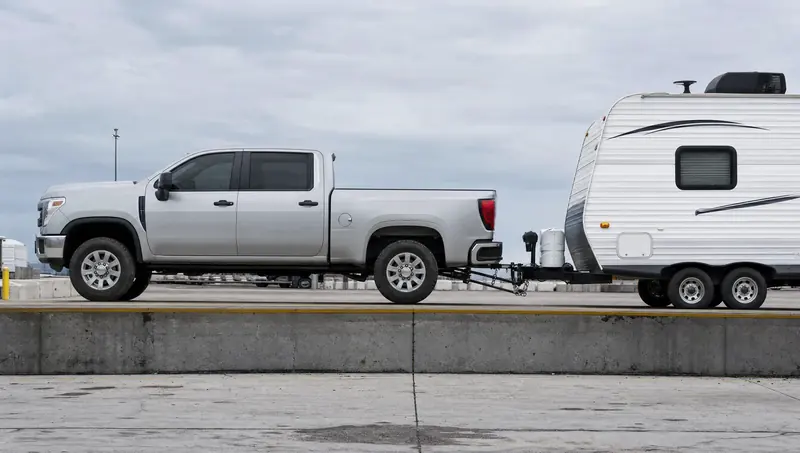
- Towing Physics/22 min readPayload vs. Towing Capacity: Why Payload Can Run Out First