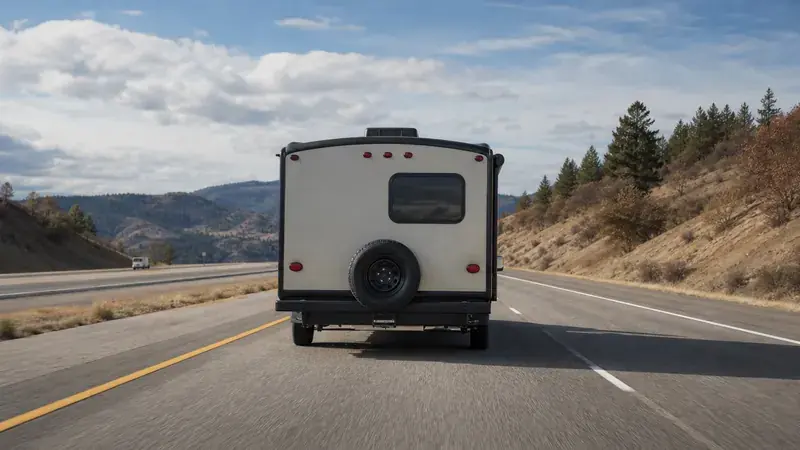
Towing Physics
Payload vs. Towing Capacity: Why Payload Can Run Out First


On this page9 sections
Why Advertised Tow Ratings Can Mislead
Payload vs Towing Capacity: Truck advertising leads with the maximum tow rating. That number is useful, but it is not enough to decide whether a family truck can tow a loaded travel trailer, and the manufacturer says so in the small print. Ford's 2024 F-150 towing guide, for example, states that its maximums are "for properly equipped vehicles with required equipment and a 150-lb. driver and passenger and vary based on cargo, vehicle configuration, accessories, option content and number of passengers," and that "Horsepower, torque, payload and towing are independent attributes and may not be achieved simultaneously."
Towing capacity represents a manufacturer-assigned maximum trailer weight rating for a specific vehicle configuration under defined test conditions. Many modern light-duty ratings are developed using SAE J2807 procedures, which evaluate launch, acceleration, gradeability, thermal performance, braking, handling, and hitch/attachment performance for configured tow vehicles.
However, trailer weight rating does not replace the vertical limits printed on your specific vehicle. In real use, passengers, cargo, hitch equipment, accessories, tongue weight, pin weight, axle ratings, tire ratings, and GVWR can become the limiting factors first. Your truck may have enough power and cooling capacity to pull a trailer, while still lacking enough remaining payload or rear-axle capacity to carry the hitch load. To verify your truck's exact capabilities, compare these ratings against our interactive GCWR & Towing Capacity Calculator.
Payload Capacity: The Vertical Limit
Payload Capacity is the maximum amount of weight a vehicle is rated to carry in and on itself. Mechanically, this weight is supported by a chain of components: frame, axles, suspension, tires, wheels, hitch equipment, and braking system margins.
Everything added to the truck after it left the factory counts against this limit:
- Occupants: driver, passengers and pets, at their real weights.
- Bed and cab cargo: coolers, generators, firewood, toolboxes, luggage.
- Aftermarket additions: steel bumpers, winches, bed covers, racks and larger wheels and tires. Each has a shipping weight on its spec sheet or box; use that rather than a guess.
- Towing gear: the hitch itself. A weight distribution hitch weighs several times what a plain ball mount does; the hitch maker publishes the figure.
- The trailer's tongue weight (or pin weight). This is the item people forget.
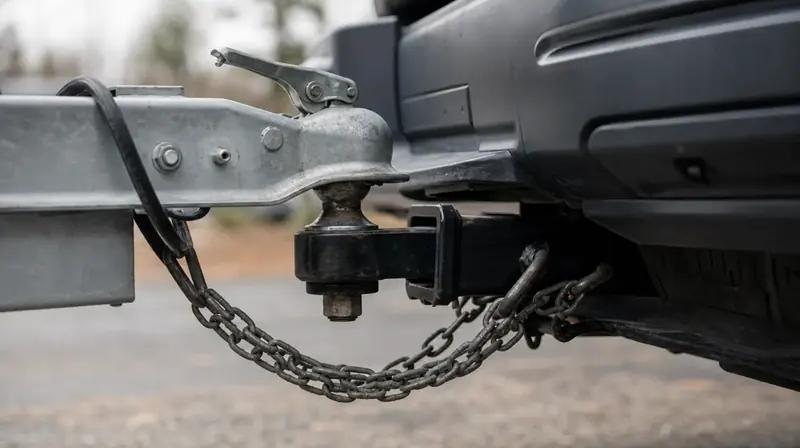
When you hitch a conventional trailer to a receiver, part of its loaded weight presses down on the hitch ball. A common planning range is 10% to 15% of loaded trailer weight for a conventional trailer and 15% to 25% for a fifth wheel or gooseneck. Ford's own towing guide computes its ratings with a tongue load of 10% and a king-pin load of 15% of the loaded trailer, and tells you to "Make sure vehicle payload (reduce by option weight) will accommodate trailer tongue load weight and weight of passengers and cargo added to towing vehicle." That vertical load consumes the vehicle's available payload and may also affect axle weights. You can calculate your available allowance using the Towing Payload Calculator.
Test Your Vehicle's Payload Capacity Limits
To visualize how quickly passengers, gear, and trailer tongue weight consume your vehicle's payload capacity, use this interactive payload calculator. Enter your vehicle's specifications to estimate your remaining margin, then verify the setup with the door label, owner manual, and scale weights.
Try it
Payload Limit Quick-Math Tool
Simulate how passengers, gear, and tongue load dynamically impact suspension ratings.
Payload Remaining
200lbs
- Trailer Tongue Weight
- 720 lbs
- Total Occupants & Gear
- 500 lbs
- Total Payload Load
- 1,300 lbs
Tight payload margin: You have consumed 87% of the entered payload rating. Leave extra margin for grades, wind, cargo variation, and scale-ticket differences.
The Math: GVWR, GAWR, and the Payload Formula
Three manufacturer ratings decide what you can carry. GVWR and the front and rear GAWR are on the certification label on the driver's door pillar; the payload figure is on the yellow Tire and Loading Information placard beside it; GCWR is in the owner's manual or towing guide (GM pickups also print it on a trailering label).
- GVWR (Gross Vehicle Weight Rating): The maximum allowable weight of the tow vehicle alone when fully loaded with fuel, passengers, cargo, and tongue weight.
- GAWR (Gross Axle Weight Rating, front and rear): The maximum weight each axle may carry. Tongue weight lands behind the rear axle, so the rear GAWR can be exceeded while the total is still under GVWR; see GAWR vs GVWR. Published ratings by model are in our Truck Specs Database.
- GCWR (Gross Combined Weight Rating): The maximum allowable weight of both the loaded tow vehicle and the loaded trailer hitched together.
The payload formula:
The placard figure already does this subtraction for the truck as built. What is left for the trailer is that figure minus everything you have added.
Here is a worked example with hypothetical numbers. Take a half-ton pickup with an advertised "11,000-lb" towing capacity:
- Manufacturer GVWR: 7,100 lbs
- True Curb Weight (with fuel and accessories): 5,600 lbs
- Certified Door Sticker Payload: 1,500 lbs
Now load this truck for a family camping trip:
- Four Passengers: 600 lbs
- Bed Cargo (Generator, Firewood, Grill): 250 lbs
- Weight Distribution Hitch: 80 lbs
- Remaining Payload for Tongue Weight: 1,500 - (600 + 250 + 80) = 570 lbs
If you buy a camper weighing 8,000 lbs loaded (well under the 11,000-lb tow rating) at a 12% tongue weight, the trailer puts 960 lbs on the hitch ball.
The result: required payload is 960 lbs (tongue) + 930 lbs (family/gear/hitch) = 1,890 lbs. That is 390 lbs over the truck's payload rating while being 3,000 lbs under its tow rating. Before buying, weigh the loaded truck at a public scale and subtract the scale weight from GVWR; that is your real remaining payload.
Why Bumper-Pull vs. Fifth-Wheel Hitch Types Matter
Where the coupler sits on the truck changes how the load is shared between the axles:
Conventional bumper pull (the lever effect):
The hitch ball sits behind the rear axle, so tongue weight levers load off the front axle and onto the rear. The rear axle gains tongue × (wheelbase + hitch overhang) ÷ wheelbase, and the front axle loses tongue × overhang ÷ wheelbase, where overhang is the distance from the rear axle centerline to the ball. With a hypothetical 145 in wheelbase and 50 in overhang, 100 lbs of tongue weight adds about 134 lbs to the rear axle and removes about 34 lbs from the front.
A weight distribution hitch uses spring bars to move part of that load back to the front axle and onto the trailer axles. Manufacturers set the trailer weight above which one is required: Ford's 2024 F-150 guide says "Do not exceed trailer weight of 5,000 lbs. when towing without a weight-distribution system." Check your own manual and the hitch receiver label.
Fifth wheel and gooseneck (load over the axle):
The hitch is mounted in the bed at or slightly ahead of the rear axle centerline, positioned per the hitch maker's instructions. With the pin over the axle there is little or no lever effect, so the front axle is not unloaded the way it is with a bumper pull.
The catch is size. Pin weight is planned at 15% to 25% of loaded trailer weight (Ford uses 15% for its fifth-wheel ratings), so a 10,000-lb fifth wheel at 20% puts 2,000 lbs on the truck. That is more than many half-tons have left after passengers and the hitch, which is why fifth wheels of that size are usually paired with three-quarter-ton or one-ton trucks. Compare it with your own placard, and see How to Calculate Tongue & Pin Weight for how to measure both.
Key terms: door-sticker acronyms
Definitions of the vertical and horizontal ratings that govern a tow vehicle:
- GVWR (Gross Vehicle Weight Rating): The manufacturer rating for the maximum allowed weight of the vehicle itself when fully loaded with fuel, people, cargo, hitch equipment, and tongue or pin weight. Exceeding this rating can affect handling, braking, component durability, warranty evaluation, insurance review, and legal exposure after a crash.
- GCWR (Gross Combined Weight Rating): The maximum rated weight of the combined package, including the tow vehicle, fluids, passengers, truck cargo, hitch, and loaded trailer. This rating reflects drivetrain, cooling, braking, launch, gradeability, and handling constraints for the configured vehicle.
- GAWR (Gross Axle Weight Rating): The maximum rated load for an individual axle assembly (Front or Rear). For half-ton trucks, the Rear GAWR is often the first rating to check because bumper-pull hitches and fifth-wheel pin loads can concentrate weight on the rear axle.
- Curb Weight: The physical weight of the vehicle as delivered from the factory, including all standard functional options, full engine fluids, and a full tank of fuel.
- Payload Capacity: Calculated exactly as the GVWR minus the actual fully-equipped Curb Weight of the vehicle. Any aftermarket modifications—such as heavy steel brush guards, winches, or composite bed toppers—directly decrease this available payload capacity pound-for-pound.
What Payload Overloading Can Change
What happens when you exceed your vehicle's payload capacity but stay within its towing capacity? You may be asking several systems to operate outside the manufacturer's rated envelope:
- Front Axle Unloading & Understeer: When too much load sits behind the rear axle, the front tires can lose contact force. Steering may feel light, and emergency maneuvers can require more distance and care.
- Rear Axle Heat & Suspension Bottoming: Rear springs or coils may compress onto bump stops, transferring more road shock into the axle, tires, wheels, and bearings. Repeated operation in this condition can accelerate wear or lead to component failure.
- Brake Heat & Fade Risk: An overloaded tow vehicle must absorb more kinetic energy during stops. On repeated downhill braking, pads, rotors, drums, and fluid can overheat, reducing braking performance.
- Sway Sensitivity: A light front axle combined with an overloaded rear axle can make the tow vehicle less resistant to crosswinds, passing-truck wakes, and abrupt steering. See our safety breakdown on Trailer Sway Physics & Prevention for recovery and prevention steps.
Worked example (hypothetical): a mountain-route half-ton setup
This is a hypothetical example built to show the method. The truck, trailer and every number below are illustrative, not a reader's trip or a measured result. Take a 30-foot travel trailer headed over a high mountain pass behind a half-ton truck rated to tow "10,500 lbs."
The trailer has a dry weight (UVW) of 7,200 lbs. After water, batteries and camping gear (propane is already inside UVW), the loaded weight rises to 8,600 lbs. At a 13% tongue-weight ratio, that places 1,118 lbs on the truck's bumper receiver.
Inside the truck, passengers and cargo add 950 lbs. A weight distribution hitch adds another 100 lbs. The total payload demand becomes 2,168 lbs.
If the truck's certified payload capacity is 1,620 lbs, this setup is 548 lbs over before the trip begins.
Altitude tightens things further. Ford's towing guide tells drivers to reduce gross vehicle weight and gross combination weight "by 2% per 1,000 ft. elevation" to match sea-level performance, so at a 10,000 ft pass the combination should be about 20% lighter than its sea-level GCWR. Find the mismatch in the driveway or at a public scale, not on the climb.
This example is a reminder: it is not only what your vehicle can pull; it is also what it is rated to carry.
Frequently asked questions
Can I install airbags or helper springs to increase my payload capacity?
No. Aftermarket suspension systems like air bags, helper springs, or sway bars only level the ride height and reduce rear-end sag. They do not change your truck's certified GVWR. Your payload limit is determined by the weakest mechanical link, which includes the frame, axle tubes, wheel bearings, brakes, and tires. Only the vehicle manufacturer can certify GVWR.
Does a weight distribution hitch remove tongue weight from my payload?
No. While a weight distribution hitch uses spring bars to leverage and transfer a portion of the tongue weight forward to the truck's steering axle and backward to the trailer's axles, it does not delete the tongue weight. The full static tongue weight, plus the weight of the hitch assembly itself (the hitch maker publishes it), still counts against your truck's payload.
How do I find my vehicle's exact, true payload capacity?
Do not rely only on brochure numbers. Open the driver-side door and locate the yellow and white Tire and Loading Information sticker. It will display the text: 'The combined weight of occupants and cargo should never exceed XXXX kg or XXXX lbs.' This is the payload rating for your exact truck as built, including factory options. Aftermarket accessories still reduce your remaining real-world margin.
Continue reading
- Payload/7 min readDoes Tongue Weight Count as Payload? Yes — Here Is the Math
- Towing Basics/16 min readWhat Can I Tow With My Towing Capacity? The 3,500 to 15,000 lb Ladder
- Towing Basics/15 min readGAWR vs GVWR: Axle Ratings, Front/Rear, and Why the Sum Is Not the GVWR
- SUV Towing Safety/16 min readCan My SUV Tow a Camper? Payload, Length and Manual Limits
- Towing Mathematics/14 min readHow to Calculate Tongue Weight: Bumper-Pulls & 5th Wheel Pins
- Highway Safety/15 min readWhat Is Trailer Sway? Causes, Recovery and Prevention